
Introduction
Education in the 21st century requires more than memorizing facts, completing assignments, or preparing students for examinations. Students need to develop critical thinking, creativity, communication, collaboration, and the ability to apply knowledge to real-life situations. To achieve these goals, teachers need learning approaches that encourage students to understand concepts deeply and actively participate in the learning process.
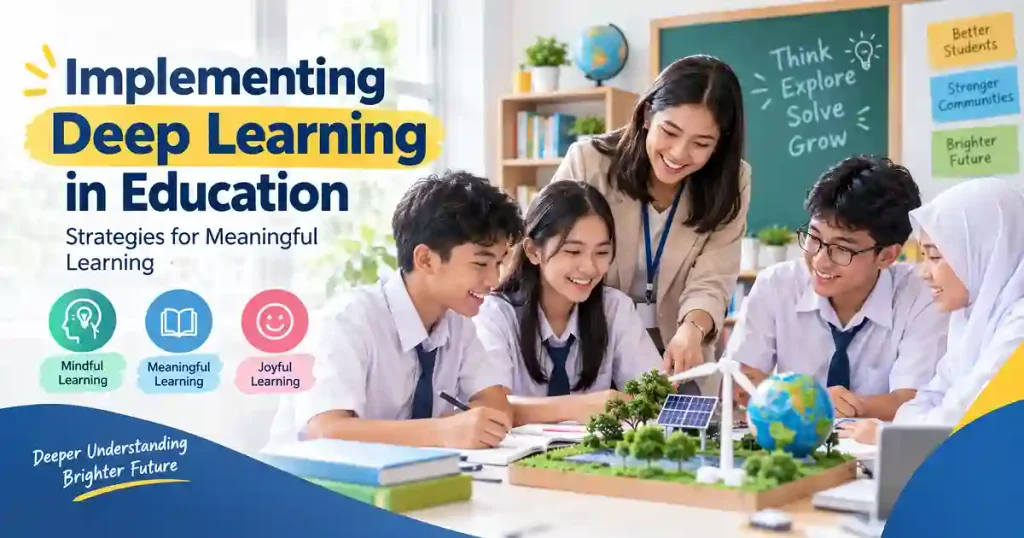
One approach that has gained increasing attention in Indonesia is Deep Learning, or Pembelajaran Mendalam. This educational approach emphasizes meaningful understanding, active engagement, reflection, and the holistic development of students.
The Indonesian Ministry of Primary and Secondary Education promotes deep learning as an approach that creates learning experiences that are mindful, meaningful, and joyful. It encourages students to understand what they learn, connect new knowledge with previous experiences, apply concepts in different contexts, and reflect on their learning. Kemendikbudristek+1
Implementing deep learning in schools requires thoughtful planning, appropriate teaching strategies, supportive learning environments, and continuous assessment. Teachers are encouraged to move beyond one-way instruction and create opportunities for students to investigate, discuss, collaborate, solve problems, and develop their potential.
This article explores the meaning of deep learning, its core principles, practical implementation strategies, classroom examples, and the benefits it offers to teachers and students.
1. What Is Deep Learning in Education?
Deep learning in education is a pedagogical approach that emphasizes comprehensive understanding, meaningful learning experiences, and the application of knowledge in real-life contexts.
Unlike learning that focuses primarily on memorization, deep learning encourages students to explore why concepts work, how different ideas are connected, and how knowledge can be used to solve problems.
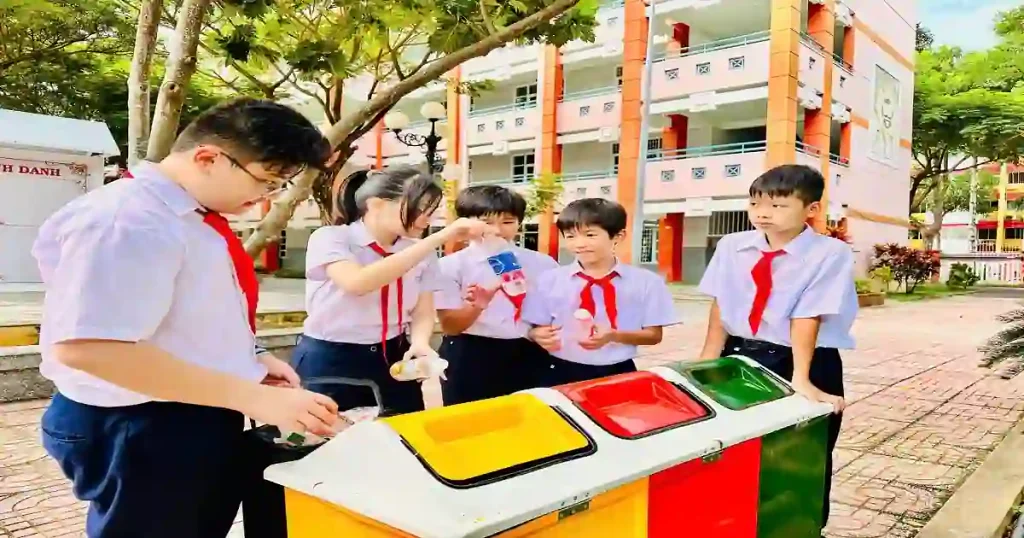
For example, when students learn about environmental pollution, they should not only memorize its definition and causes. They can also investigate waste management in their school, analyze its effects on the surrounding community, and develop practical solutions to reduce waste.
Through this process, students gain knowledge while developing analytical thinking, problem-solving abilities, communication skills, and social responsibility.
In Indonesia, deep learning is promoted as an educational approach rather than a new standalone curriculum. Its implementation supports improvements in teaching practices and student learning experiences across educational levels. Kemendikbudristek+1
2. The Three Core Principles of Deep Learning
The implementation of deep learning is guided by three interconnected principles: mindful learning, meaningful learning, and joyful learning.
A. Mindful Learning

Mindful learning means learning with awareness, purpose, and active engagement. Students understand the learning objectives, recognize what they already know, monitor their progress, and take responsibility for improving their understanding
Classroom application: Teachers explain the learning objectives, invite students to formulate questions, encourage self-assessment, and provide time for reflection.
B. Meaningful Learning

Meaningful learning connects new knowledge with students’ previous experiences and real-life situations. Students understand not only what they are learning but also why the knowledge matters.
Classroom application: Teachers use authentic problems, case studies, experiments, local community issues, and interdisciplinary projects to help students apply their knowledge.
Managing AI Proliferation while Mitigating Student Privacy Risks: A Tech Director’s Action Plan
C. Joyful Learning

Joyful learning creates a positive, safe, inclusive, and motivating learning environment. Students feel respected, supported, and encouraged to participate without fear of humiliation or unnecessary pressure
Classroom application: Teachers use collaborative activities, educational games, creative projects, open discussions, and constructive feedback to make learning engaging and challenging.
These principles work together. Mindful learning helps students become aware of their learning process, meaningful learning connects knowledge to life, and joyful learning creates an environment in which students feel motivated to learn. Kemendikbudristek+1
3. The Main Learning Experiences: Understanding, Applying, and Reflecting
An effective deep learning process provides students with opportunities to understand concepts, apply what they have learned, and reflect on their experiences.
A. Understanding Concepts
The first stage focuses on building a strong conceptual foundation. Students explore essential ideas, identify relationships between concepts, ask questions, and explain information in their own words.
Teachers can facilitate this process through guided discussions, demonstrations, reading activities, concept maps, experiments, and problem-based questions.
For instance, in mathematics, students should understand why a formula works rather than simply memorize the steps required to use it.
B. Applying Knowledge
After understanding a concept, students need opportunities to apply it in different situations.
Teachers can provide real-world problems, group projects, simulations, practical experiments, and case studies. These activities help students recognize the relevance of their learning and develop the ability to transfer knowledge across contexts.
For example, students studying percentages can calculate discounts, compare product prices, or prepare a simple budget for a school activity.
C. Reflecting on Learning
Reflection enables students to evaluate what they have learned, identify difficulties, and determine how to improve their performance.
Teachers can ask questions such as:
- What important concept did you learn today?
- How can you apply this knowledge in everyday life?
- What difficulties did you encounter?
- What would you do differently next time?
Reflection should be an integral part of the learning process rather than an activity reserved for the end of a semester.
The Indonesian deep learning framework explicitly identifies understanding, applying, and reflecting as important learning experiences. Kemendikbudristek+1
4. Practical Strategies for Implementing Deep Learning in Schools
Teachers can implement deep learning gradually by integrating it into lesson planning, classroom activities, and assessment practices.
1. Design Clear and Meaningful Learning Objectives
Learning objectives should describe what students are expected to understand, demonstrate, or apply.
Instead of focusing exclusively on remembering information, teachers can design objectives that require students to explain relationships, analyze evidence, develop solutions, or evaluate different perspectives.
Clear objectives also help students understand the purpose of their learning.
2. Connect Lessons with Students’ Prior Knowledge
Before introducing a new topic, teachers can explore what students already know through brainstorming, short discussions, diagnostic questions, or concept maps.
Connecting previous knowledge with new information helps students build stronger conceptual relationships.
For example, before teaching ecosystems, a science teacher might ask students to describe plants, animals, and environmental conditions they observe around their homes or schools.
3. Use Problem-Based and Project-Based Learning
Real-world problems provide opportunities for students to investigate issues, collect information, evaluate evidence, and develop solutions.
A school environmental project, for example, might involve measuring classroom waste, classifying recyclable materials, analyzing findings, and designing a waste-reduction campaign.
Such activities integrate subject knowledge with communication, collaboration, creativity, and problem-solving.
4. Encourage Questions and Critical Thinking
Teachers should create opportunities for students to ask questions, challenge assumptions respectfully, compare explanations, and support their conclusions with evidence.
Open-ended questions are particularly useful because they encourage students to explain their reasoning rather than simply provide short answers.
Examples include:
- Why do you think this happens?
- What evidence supports your explanation?
- Is there another possible solution?
- How would the result change if the conditions were different?
These questions help students develop deeper understanding and intellectual independence.
5. Promote Collaboration and Respectful Discussion
Group learning can help students encounter different perspectives and learn from one another.
Teachers should establish clear expectations so that every student has an opportunity to contribute. Activities can include group investigations, peer teaching, collaborative presentations, and structured debates.
Collaboration should involve genuine intellectual participation rather than simply dividing a task into separate pieces.
6. Integrate Digital Technology Purposefully
Digital tools can support deep learning when they help students investigate information, visualize complex concepts, collaborate, or communicate their findings.
Examples include virtual simulations, educational videos, digital concept maps, online research, and collaborative documents.
However, technology should serve the learning objectives. A lesson does not automatically become deep learning simply because it uses computers, mobile devices, or artificial intelligence.
Teachers should also help students evaluate online information, protect personal data, and use digital resources responsibly.
7. Provide Formative Assessment and Constructive Feedback
Formative assessment helps teachers understand students’ progress while learning is still taking place.
Teachers can use observation, questioning, short written explanations, exit tickets, quizzes, student presentations, and learning journals.
Feedback should identify what students have done well, what needs improvement, and what steps they can take next.
This approach makes assessment part of the learning process rather than merely a method of assigning grades.
8. Encourage Reflection and Self-Assessment
Students should be given opportunities to evaluate their understanding and learning strategies.
Teachers can use reflection journals, self-assessment checklists, peer feedback, and short end-of-lesson discussions.
These practices help students recognize their strengths, understand their challenges, and develop greater independence.
9. Build an Inclusive and Supportive Learning Environment
Deep learning should respect differences in students’ abilities, interests, backgrounds, and learning needs.
Teachers can provide varied learning materials, flexible grouping, different ways to demonstrate understanding, and appropriate support for students who need additional assistance.
A supportive classroom encourages students to express ideas, make mistakes, ask for help, and learn from feedback without fear of embarrassment.
10. Develop Teachers’ Professional Competence
Successful implementation requires teachers to continually improve their pedagogical knowledge and classroom practices.
Teachers can collaborate through professional learning communities, lesson studies, peer observations, reflective discussions, and the sharing of effective teaching strategies.
School leaders can support these efforts by providing time for collaboration, access to learning resources, and opportunities for professional development.
5. Example of Deep Learning Implementation in a Classroom
The following example illustrates how a teacher can apply deep learning principles in a junior secondary school science lesson.
Classroom Project: Reducing Plastic Waste at School
Subject: Science and environmental education
Topic: Waste management and environmental sustainability
Duration: Two to three lessons, depending on the project scope
Step 1: Understanding
Students explore the types of waste produced at school, discuss the environmental effects of plastic pollution, and investigate how waste can be reduced.
Step 2: Applying
In groups, students observe waste-disposal practices, classify waste, record their findings, and propose practical solutions such as waste separation or reducing single-use plastics.
Step 3: Reflecting
Students present their findings, evaluate the effectiveness of their proposed solutions, and reflect on how their behavior can contribute to a cleaner school environment.
Applying the Three Principles
- Mindful: Students understand the project objectives and monitor their contributions.
- Meaningful: Students investigate a problem they can observe in their own school.
- Joyful: Students collaborate, share ideas, and create solutions in a supportive environment.Suggested Assessment Criteria
- Understanding of environmental concepts
- Quality of evidence and analysis
- Practicality of proposed solutions
- Collaboration and communication
- Reflection on learning and personal responsibility
This project demonstrates that deep learning does not always require expensive equipment or sophisticated technology. Teachers can begin with accessible resources and familiar issues in the school environment.
6. The Role of Teachers in Deep Learning
Teachers remain essential to the success of deep learning. Their role extends beyond delivering content to designing meaningful experiences and guiding students toward deeper understanding.
In practice, teachers should:
- Act as facilitators who guide students’ exploration and reasoning.
- Design activities that connect knowledge with real-life situations.
- Encourage students to ask questions and express different perspectives.
- Provide constructive feedback and appropriate learning support.
- Build positive relationships and maintain a respectful classroom.
- Assess both learning outcomes and the processes students use to reach them.
- Reflect on teaching practices and make improvements based on evidence.
The teacher’s role is not to remove all challenges from learning, but to ensure that students receive the guidance and support needed to work through meaningful challenges.
7. Challenges in Implementing Deep Learning and Possible Solutions
Although deep learning offers valuable opportunities, schools may encounter practical challenges during implementation.
| Challenge | Possible solution |
|---|---|
| Limited instructional time | Prioritize essential concepts and design integrated activities. |
| Large class sizes | Use structured group work, clear roles, and manageable assessment tools. |
| Different student abilities | Apply differentiated instruction and provide flexible learning support. |
| Limited teaching resources | Use locally available materials and familiar real-life problems. |
| Students’ dependence on memorization | Introduce open-ended questions and tasks requiring explanations. |
| Teachers’ limited experience | Organize peer collaboration, professional development, and lesson reflection. |
| Assessment focused only on grades | Combine tests with projects, observations, portfolios, and reflection. |
The key is to implement deep learning progressively. Schools do not need to transform every lesson at once. Teachers can start with one topic, review the results, and expand effective practices over time.
8. How to Evaluate the Success of Deep Learning
The effectiveness of deep learning should be evaluated through evidence of student understanding, application, and reflection—not solely through test scores or the number of completed assignments.
Teachers can consider the following indicators:
- Students can explain concepts using their own words.
- Students can connect new information with prior knowledge.
- Students can apply concepts to unfamiliar or real-life situations.
- Students can analyze information and justify their conclusions.
- Students participate actively in discussions and collaborative work.
- Students can identify their learning challenges and plan improvements.
- Students demonstrate respectful communication and responsible behavior.
Schools can collect evidence through formative assessments, project rubrics, student portfolios, classroom observations, learning journals, and periodic evaluations.
These indicators help teachers identify whether students are developing deeper understanding and whether instructional strategies need adjustment.
9. The Importance of School Leadership and Community Support
Deep learning is more effective when teachers are supported by school leaders, parents, and the wider community.
School principals can encourage collaboration, provide opportunities for professional development, and help teachers design learning activities that align with school goals.
Parents can reinforce meaningful learning by discussing everyday experiences, encouraging curiosity, and allowing children to solve age-appropriate problems independently.
Community organizations and local professionals can contribute authentic learning experiences through demonstrations, interviews, field visits, and collaborative projects.
Digital resources can also extend learning beyond the classroom when used responsibly and with clear educational purposes.
The Indonesian Ministry of Primary and Secondary Education highlights collaboration across the educational ecosystem, alongside appropriate learning environments and digital technology, as part of the broader framework for deep learning. Kemendikbudristek+1
Conclusion
Implementing deep learning in education is an important step toward creating learning experiences that are more meaningful, engaging, and relevant to students’ lives. By emphasizing mindful, meaningful, and joyful learning, teachers can help students move beyond memorization toward deeper understanding, practical application, and thoughtful reflection.
Successful implementation requires clear learning objectives, relevant classroom activities, constructive assessment, supportive relationships, and continuous teacher development. It also requires school leaders, parents, and communities to work together to support students’ growth.
Most importantly, deep learning does not depend on expensive technology or complicated teaching methods. It begins when teachers encourage students to think, ask questions, explore ideas, solve problems, and understand how knowledge can be used in everyday life.
Through consistent implementation, schools can help students develop the knowledge, skills, character, and confidence needed to become independent learners and responsible members of society.
Frequently Asked Questions (FAQ)
1. What is deep learning in education?
Deep learning is a pedagogical approach that emphasizes comprehensive understanding, meaningful learning experiences, real-life application, and reflection rather than relying primarily on memorization.
2. What are the three main principles of deep learning?
The three principles are mindful learning, meaningful learning, and joyful learning. They encourage students to learn purposefully, connect knowledge with real-life experiences, and participate in a positive learning environment.
3. Is deep learning the same as artificial intelligence?
No. In this article, deep learning refers to an educational approach to teaching and learning. In computer science, deep learning is a type of machine learning that uses multilayer neural networks. The two concepts have different meanings.
4. How can teachers implement deep learning in the classroom?
Teachers can implement it through problem-based learning, project-based learning, inquiry, collaborative discussion, real-world activities, formative assessment, and structured reflection.
5. Is deep learning suitable for all educational levels?
Yes. Activities should be adapted to students’ ages, developmental stages, prior knowledge, abilities, and learning needs. The core principles can be applied across different subjects and educational levels.
6. What is the difference between deep learning and conventional memorization?
Memorization focuses on retaining information, while deep learning emphasizes understanding relationships, explaining concepts, applying knowledge in different contexts, and reflecting on the learning process. Memorization can still be useful when it supports deeper understanding.
7. Does deep learning require digital technology?
No. Digital technology can support research, collaboration, visualization, and assessment, but meaningful learning can also take place through discussions, experiments, practical activities, and locally available resources.
8. How can teachers assess deep learning?
Teachers can use written explanations, performance tasks, project rubrics, presentations, portfolios, observations, formative quizzes, and reflection journals to evaluate understanding and application.
9. What is the role of teachers in deep learning?
Teachers act as facilitators, learning designers, mentors, and assessors. They guide students’ thinking, provide constructive feedback, create supportive environments, and help students develop independence.
10. Is deep learning a new curriculum in Indonesia?
Deep learning is an educational approach, not a separate curriculum. It is intended to strengthen the quality of learning experiences and teaching practices. For the current regulatory framework, teachers and schools should consult the official Ministry of Primary and Secondary Education resources. Kemendikbudristek+1
References
- Ministry of Primary and Secondary Education of the Republic of Indonesia. Deep Learning Approach Toward Quality Education for All. Official National Curriculum Information System. Read the official deep learning framework.
- Ministry of Primary and Secondary Education of the Republic of Indonesia. The Minister of Primary and Secondary Education Emphasizes the Role of Deep Learning in Improving the Quality of Indonesian Education. February 17, 2025. Read the official press release.
- Ministry of Primary and Secondary Education of the Republic of Indonesia. Deep Learning Through Ministerial Regulation No. 13 of 2025. National Curriculum Information System. Read the policy overview.
- Ministry of Primary and Secondary Education of the Republic of Indonesia. Clarifying Misconceptions About Deep Learning for Quality Education. September 5, 2025. Read the official discussion.
- Directorate General of Teachers, Education Personnel, and Teacher Education. Deep Learning Strengthens Students’ Analytical Thinking Skills. Read the educational article